Sunday, April 2

Lifeline

I spent part of my weekend in the hospital. No need to elaborate other than that it involved blood, pain, and that demon spawn abomination of human invention, needles.

The universe works in strange and wonderful ways to teach those with eyes to see. My most recent lesson came in two parts.


Part The First
Wating in the doctor's office, a movement caught my eye. Across the waiting room was a little boy of three or four. He had on chaps, cowboy boots, a holster, vest and a kerchief. In the chair next to his mother were the tools of his trade: a six-shooter, a wide-brimmed cowboy hat, and a picture book. He took a long draw of milk from his water bottle (every cowpoke west o' the Pecos knows how dry the desert is) just before the nurse called his mother's name. Like a good cowboy, he holstered his six-gun, pulled his hat rakishly over his eyes, cradled his picture book with two hands, and sauntered after his mother with all the confidence of a well-seasoned ranch hand.

Which, of course, as anyone should plainly see, he was.


Part The Second
"This is worrisome," the doctor said. "I'll call the emergency room. Go now." Within twenty minutes, I was in the gown, lying on a gurney with too few blankets, plugged into an IV drip. Beyond the curtain separating me from the next patient, I heard words like Alzheimers and incontinence and kidney failure. I tried to empty my mind of the sounds and smells of the hospital and concentrate on my book. It didn't work. I asked directions to the bathroom. On the way back I saw that the curtains of my sick neighbor were drawn back. On her gurney lay an elderly woman, thin hair slicked back with sweat. Even under several blankets it was plain how thin and frail she was. What haunted me were her eyes. They were wide and sunken. In them could be seen anger, fatigue, bewilderment.

And fear.


Denouement
Two ends of the thread of life curved, met, and made the circle while I observed.

One person was at the beginning of his life, looking forward with courage and curiosity.

One person was nearing the end of her life, looking inward with questions and surrender.

And I, reckoning that a few years less than my grandfather's lifespan is a pretty good run, realized that I was exactly in the middle.
Saturday, April 1

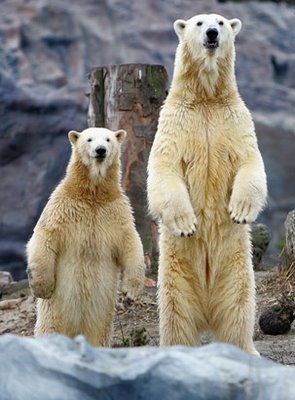
Caged Curiosity

"What are they doing, Momma?"

"They're touching faces, son."

"Why?"

"You know how Rosie and Pete touch noses sometimes?"

"Yeah, like Uncle Bruce and Stevie?"

"Um, well sort of. We'll talk about your uncle when you're older. But remember after all the nose touching, Rosie had your cub-cousin Rolly?"

"Yes."

"The dumbthings face-touching is like that."

"Are they going to have a cub-cousin? Can I watch?"

"Yes. No. I mean, you can't watch, and they already have one. See that rolling thing with the screaming pink thing in it?"

"Yes, Momma."


"That's the cub."

"THAT? It looks stupid."

"Yes it does. It wouldn't last a day on the ice."

"Tell me about the ice again, Momma."

"It's cold and it feels good. Not like here. And there are good things to find and eat."

"Things to eat like the pink cub?"

"No, things that are quiet and smell good. That taste like fat and blood."

"I'm hungry, Momma."

"I know. So am I. Let's go leave our markings, and hope they bring a walrus."

"What's a 'walrus'?"

"Never mind, son."

Sunday, March 26

Addwaita

One of the world's oldest creatures, Addwaita, an Aldabran giant toroise, died this week at the estimated age of 250 years. There is some debate about the revered Grandpa's real age. Some may place it at little more than 150+/- years, but I choose to believe he was TWO-HUNDRED-FIFTY. Why? Just because.

Year 0, 1756 - Addwaita hatches. Mozart tours Europe as a six-year-old prodigy
Year 9, 1765 - James Watt invents the steam engine
Year 20, 1776 - America declares independence
Year 33, 1789 - French revolution
Year 43, 1799 - Rosetta stone discovered in Egypt
Year 63, 1819 - Bolivar liberates northern South America from Spain
Year 86, 1842 - Ether used as first anesthetic
Year 103, 1859 - Publication of Darwin's Origin of Species
Year 105, 1861 - U.S. civil war begins
Year 109, 1866 - Alfred Nobel invents dynamite
Year 123, 1879 - Thomas Edison invents the electric light
Year 139, 1895 - X-rays discovered, motion pictures debut in Paris
Year 147, 1903 - Wright brothers fly first aircraft, Ford Motor Co established, first World Series
Year 158, 1914 - World War I begins
Year 173, 1929 - Stock market crash begins the Great Depression
Year 177, 1933 - Hitler becomes German chancellor, international tensions lead to WWII
Year 189, 1945 - First atomic explosion over Hiroshima
Year 192, 1948 - Ghandi assassinated
Year 207, 1963 - Kennedy assassinted
Year 213, 1969 - Humans land on the Moon
Year 230, 1986 - U.S. Challenger shuttle explosion
Year 235, 1991 - South Africa repeals apartheid, Yelstin first elected Russian president
Year 245, 2001 - Terrorists crash planes into New York's World Trade Center

Year 250, 2006 - Addwaita dies. Kingfisher calculates a bristlecone pine in the American Southwest was 4,600 years old when Addwaita was hatched, or 46 centuries old, or approximately 19 Addwaita lifetimes.

Monday, March 13

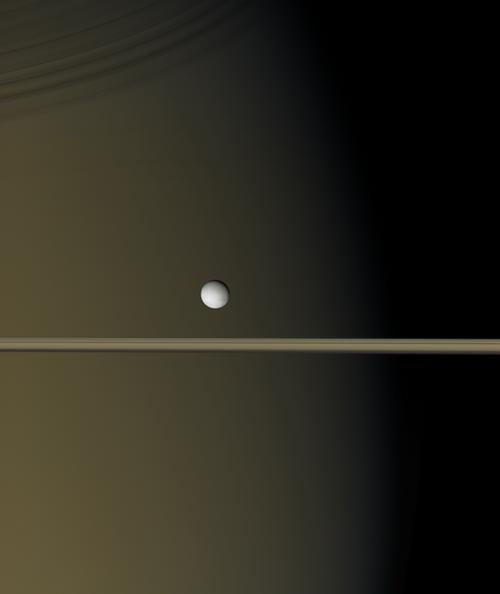
There Are Worlds Out There

Image from the
NASA/JPL
Cassini/Huygens
Mission to Saturn

This is Enceladus, a tiny, icy pearl of a moon orbiting one of the gas giants beyond Mars. Behind it is the looming bulk of Saturn, clothed in the browns we would see could we be there. Beneath it are some of the famous thin rings, an indication of the dwarf moon's small insignificance. The shadow of the rings on the planet's surface can be seen at top left. Breathtaking, spectacular, unbelievable; the picture clutches me and refuses to let go.

Recently, scientists discovered what they believe to be geysers spewing water on Enceladus. Of course, in the frigid outback of our solar system, the water instantly freezes and creates ice calderas. However, if there is an underground supply of liquid water, it greatly increases the chance of life existing somewhere else in this little backwater of the galaxy. That by itself is fascinating, the stuff that daydreams and wishful what-ifs are made of. I have spent most of my life in love with the idea of otherworldly flora and fauna, pondering the endless beauties and possibilities of that most important of questions: What else is out there?


But that's not what drew me to this photograph.


Enceladus is one of many related gems; its siblings have similarly exotic names: Titan, Tethys, Phoebe, Mimas, Dione. They were set in and around the glorious rings of their master, Saturn. From the beginning they revolved in a slow, silent, sedate dance against the backdrop of an infinite frozen night. Like jewels, they glittered in in the Saturnian sky, brightened by a Sun far away. For millennia upon millennia, it was unchanged.

And Enceladus danced.

Elsewhere, a molten rock cooled, bathed in vapors that condensed into wide seas, weaving a blue mantle across the planet's face. It was a volatile, changing world, thrusting up mountains in its raging growth, then tearing them down in wrathful cataclysms. It coughed and shuddered under the battering of debris from the immediate environs, incorporating the flotsam into its primordial skin, churning the Sun's energy to its own uses.

And Enceladus danced.

The blue world gave birth to living things, first little more than microscopic bubbles, eventually moving, eating, growing, swimming, breathing, walking, building. Over the eons, a vast and remarkable procession of creatures called this place home, each pushing and fighting and reproducing in an unstoppable attempt to fill and claim the young planet.

And Enceladus danced.

Eventually, the first thinking beings emerged to stare up at the sky and ask the first questions, among them What else is out there? These sapient primates learned, adapted, and progressed in ever more complex societies at an alarming rate. Leaders waged wars, prophets preached and foretold, great works were begun and finished or destroyed, science was invented, children were born and died, civilizations rose, flourished, and fell.

And Enceladus danced.

The thinking beings scratched at the heavens, succeeding in sending mechanical probes to the outer neighborhood in attempts to find answers their questions. They were able to send members of their own family in puny, pathetic vessels into that great blackness that was home to all else. And they sent a visitor, a visitor which greeted the children of Saturn, and which took their portrait.

And Enceladus danced.

As it must come to all things, extinction came quick, quiet, and unexpected. In the blink of the universe's unseeing and uncaring eye, the blue world's thinking beings disappeared. All their works, their arts, their very thoughts were obliterated, hidden among the infinite multitudes of stars, covered over by the dust and forgetfulness of years numbering many, many millions.

And Enceladus danced.

Monday, February 27

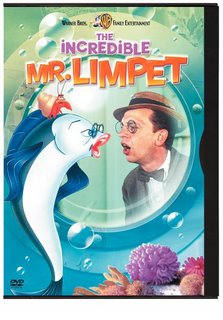
Goodbye, Mr. Limpet


He wasn’t a blockbuster star, but Don Knotts is arguably one of the most recognizable figures to baby boomers. He was on TV almost every day thanks to “The Andy Griffith Show” syndication, and Saturday afternoon screenings of such classics as “The Reluctant Astronaut“ and “The Ghost and Mr. Chicken.” Even young teens know him from re-runs of “Three’s Company.”

His career spanned over fifty years. During that time, as entertainment grew ever more risqué, daring, and brash, Don kept a sense of kind innocence. His harmless yet hilarious goofball persona was, and still is, a favorite of kids and adults alike. He was the last of a kind: the Jimmy Stewart type of gentleness, self-deprecation, and aw-shucks goodness that has long since departed Hollywood. He was the sad-eyed runt-of-the-litter puppy no one could resist.

For me, however, Don will always be “The Incredible Mr. Limpet.” It’s a boyhood favorite that’s delightful to revisit once in a while. I have wistful memories of the metal-cornered fish tanks, the daydreaming misunderstood man’s wish to be a fish, his friendship with a curmudgeonly tin can-toting hermit crab, and the ridiculous “HAROOM”-ing at Nazi torpedoes. I think I can point to that movie as starting my life-long obsession with aquaria, catch and release fishing, and all things under the ocean. It is a hobby and an interest that has occupied much of my life, even in my dreams.

Goodbye, Mr. Limpet, and thank you. May the great beyond show you safe seas.

Wednesday, February 15

I Am Man, Hear Me Roar

For a short while, my mother tried the gentle-lady farmer routine. It was great to visit in the spring: flowers and vegetables sprouting, Jose the donkey racing down the long driveway anticipating the carrots in your pocket, the rooster making sure all his hens were in the right place, bluebirds making nests in the birdhouses I and her husband made, alligator lizards snoozing under the hose bib, geese hornking on the pond......

And Billy, the satanic asshole goat. He was eight feet tall at the shoulder, peed in his mouth before rubbing his harem with his prodigious phallus, shot lasers from his eyes, and could smell your testosterone from half a mile. I went in once to pet the baby goats, and Billy reared up, a stormy tower of badassness topped by wicked curved horns, hepped up on clover, my puny pale humanity in his crosshairs. I cowered behind a post, hoping for safety, peering up in terror at the thousand-foot devil that was Billy. His glowing ember eyes stared from the clouds as lightning swirled about his evil crown, the ground trembled beneath his might, bats and snakes and demons pranced across his shaggy coat, his stink caused trees to fall over and vultures to drop from the sky. I whimpered what I thought was my last futile wussiness.

"Billy!"

My senior mother, five inches shorter, in a long skirt, muscles half my size, strode into the field, grabbed Billy by one skull-weapon, and twisted him to the ground with one blue-veined wrist. "Stop that." She then proceeded to gather the baby goats in the fold of her skirt while simultaneously grabbing some afalfa and somehow banishing the now chastised Billy to the fence. The mating season was in full bawdy, growing things were crazed with the fullness of life, the afternoon spring sun suffused the world with warmth and contentment. In the center of it all, my mother held court.

Later, as I fed Jose a carrot and watched a bluebird flit about with string in its beak, I realized that Nature really is a Mother.

Tuesday, January 10

Ode To China Buffet

Oh, China Buffet, How I Love Thee.

Where else can I dine on fried prawn phlegm, oyster plum sperm, and shag carpet broccoli?

Where else can I play Guess the Beast You're Eating? Is it pork? Is it penguin? Is it zebra? Is it pork-in-bra?

Where else can I enjoy a pot of hot green tea disguised as a broken vessel of lukewarm tan pond water?

Where else can I stand in line next to a woman whose butt is bigger than her car, and whose chest is bigger than her butt? And whose plate of food is bigger than all three?

Where else can I dodge small foreign children on the floor playing with chicken bones?

Where else can I see the entire state of West Virginia celebrate a wedding rehearsal dinner?

Where else can kimono dolls, sushi, and tempura be considered Chinese?

Where else can ambient music be that special muzak rendition of Staind's cover of Air Supply's Beer Barrel Polka, as interpreted by the Inuit?

Where else can I crack open dessert and find my fortune, which reads "Behind an able man, there are always."?

Oh, yes, China Buffet, How I Love Thee.


p.s. Thanks for the food poisoning.

Friday, December 30

That Feels Me Better!

Don’t tell me you haven’t done this. You have sooo done this.

Working the week after Christmas wasn’t easy. Stuffed with ham, turkey, chocolate, OJ, champagne, green beans, coffee, and smoked salmon, I waddled into my cubicle feeling bloated. It was compounded by all the leftovers everyone was sharing in the lunchroom. My self-control stinks; in December it’s worse. On the third day, several people were out sick with the flu, so I thought maybe I was coming down with something, too.

After a salad for lunch, my innards would not be denied. I ran to The Room and took a seat.

FRAAAATTTTTLLLBBBBBBRRRRRR

Emptying that much gas would make anyone feel better. And now I knew I wasn’t sick. It was embarrassing, but luckily no one else was in the restroom. I stood up, thankful I would be able to enjoy the upcoming three-day weekend.

But oh, no. That was just the overture. The orchestra was just warming up. Kind of like when you top off your gas tank, this was just the small spillage because the system couldn’t hold any more. You’ve heard of a collapsed lung? I was about to experience a collapsed abdomen, in one long uninterrupted Hindenburg deflation that started at my eyebrows and ended at the Earth’s core.

At 100% full, the bassoons filled the tiled room with a rich bass that vibrated the steel of the stalls.

At 90%, the trombones entered with a blatty fanfare, a strong baritone counterpoint to the increasing cacaphony.

At 80%, the pipe organ chimed in with an exuberant thrumming, pounding easily under the door and through the walls. The absurdity of it all started me to laughing. “PMMMMTTTHHHHHHBBBBRBL! Hee hee heee!”

70% - two people down the hall discussed their sadness that Christmas was over, so I caroled them with “Shall I play for you? bum rumpa bum bum!”

60% - someone in the ladies’ room next door pondered how a goat could be giving birth on the fourth floor.

50% - at a deposition in the second floor attorneys’ office, a stenographer could not figure out how to translate “BBBRROMMMMMLLTTTAHHBBBB cackle cackle cackle.”

40% - a chorus of car alarms started in the grocery store parking lost across the street.

30% - at Caesar’s Palace 15 miles away on the strip, a young man on his honeymoon placed his last $20 on a black spin of the roulette wheel. He was dismayed when red came up, but delighted when an unexplained temblor bounced the ball onto black.

20% - herds of hippopotamus descended on Lake Mead 30 miles away, answering what they thought was a massive apocalyptic mating call.

10% - the moon scooted 2 inches farther out in its orbit.

With a final *squip!*, the whoopie cushion that was Kingfisher ended its performance and took its final bow. And there I was, a thundermug gnome, wiping my teary eyes with TP. Strangely, that’s all I needed it for; the rest of me was fine and dandy.


On January 1st, as is my family’s tradition, I will make a big pot of black-eyed peas. I will eat extra helpings, and hopefully amuse myself, my children, plus the entire state of Arizona.

Friday, December 2

The Lesson Of The Window Painter

It was the end of a long week visiting in California over the Thanksgiving holiday. The drive back to the desert from the Sierra foothills is a nine-hour drive in the best of circumstances. It was shaping up to be at least eleven with the endless line of eighteen-wheelers, RV’s, and autos crammed full of vacationers going back home.

My middle son and I were already bored and tired halfway through the trip, despite having loaded up on olives, dried fruit, Jordan almonds, and other central California delicacies at the many road side Mom-and-Pops along highway 99. Just southeast of Bakersfield, as always, the feel of the trip changed drastically. After turning onto highway 58, we began a long climb over the last of the hills to feel the Pacific’s breath. Gone were the endless fields of stuff green or fallow. The orchards with their military rank and file precision disappeared. The earthy tang of cow manure, wood smoke, and growing things gave way to, well, not much of anything.

The Central Valley morphed into another classic west coast terrain, the dry oak woodland. It clung to hillsides traversed by train lines little changed in 100 years. It was a beautiful drive, but bittersweet. In 30 miles, the California I know would vanish. It would stretch in one last fertile and futile attempt to the low mountain pass, then give in to greater forces, meandering downhill to sulk in the Mojave. Before it admitted defeat, however, it showed us one last little gem: Tehachapi.

Those unfamiliar with California tend to visualize the sunny beaches of Malibu, the Golden Gate bridge, Hollywood, or maybe ski resorts. The other 95% of the state is dotted with Tehachapis; small towns with tourist traps, historic markers, or nothing much of note. And in each of these is a place I like to discover: the local café/diner/family restaurant. In Tehachapi, that place is Kelcy’s.

My son and I pulled up in front, weary from an already long trip, and hungry. I set the car alarm, it went “bweep!” and we walked up to the door. A strong odor assaulted us. Looking around I saw a black man standing near the front of the restaurant, peering through the smoke wafting to us from his cheap cigar. He was wearing a threadbare hooded sweater against the chill, warming his hands on a Styrofoam cup of coffee. His beard was ragged and unkempt, bits of broken leaves or some such stuck in it. His jeans looked dirty and had holes at the knees. He peeked at us from the corner of the brick wall, appearing to take some shelter from the breeze. All in all, he looked pretty unsavory.

I ushered my son in and he selected a spot at the counter. We always sit at the counter because it’s an honest-to-God old formica job with decades of wear from the elbows of patrons. The wall in front of us had a 1930’s era radio with an almost as old sign that read “STILL WORKS” scrawled in crooked letters. A few feet to the right of it was an old clock, the type with cardboard cards that flipped every ten seconds or so, advertising local businesses in bright fluorescent poster paint. My son had seen only this one, I hadn’t seen one in at least twenty years, and I don’t think you can buy the gaudy paint in any modern market chain. The opposite wall was covered in old black and white photos of the town and its resident farmers, lumberjacks, ranchers, and, of course, trains.

To my surprise, my son ordered a ham and fried egg sandwich (when was the last time you saw that on a menu?), and I ordered an omelette. My traveling philosophy has always been that the rating of any small town eatery is directly proportional to the size of their omelettes, and the number of hours in the day you can order one. The ubiquitous plump, buxom waitress brought my son’s Sprite, poured my black coffee, and we took to our plates with mismatched silverware.

I made sure to keep an eye out the window. Our car was filled with souvenirs, trinkets, gifts, a chair my mother had given me, and most important, my cherished laptop. Despite the car alarm, I wasn’t too sure about the disheveled character out front. We ate our lunch in quiet, my son and I both in a contemplative space about our recent trip. I watched the car every minute or two until the check came. I laid out bills on the counter, making sure to leave a generous tip, as I always do if the mountain town waitress is pleasant and efficient.

It wasn’t until we stood on the sidewalk that I learned my lesson, and realized my eyes weren’t as observant as I had thought.

There was the black man, a brush in his hand, painting Christmas murals on the restaurant windows. At the moment he was working on an angel. He had completed a Christmas tree, a nativity scene, and the phrase “Happy Holidays” in bright red. The mural had a childlike quality to it. The sheep looked sort of like the camel, and the camel looked sort of like the sheep. The angel’s wings weren’t symmetrical. The tree was ordinary. The writing was definitely not calligraphy. But it was all honest and happy and homely and humble, right down to the squiggly extra rays of baby Jesus’ halo.

My brain fumbled in its unfairness and embarrassment. He knew nothing of my earlier thoughts, but I knew I had wounded him. I struggled for something, anything.

“That looks great,” I said lamely.

“Thank you!”

“You have a Merry Christmas, ” I said.

“Thank you, sir. Happy Holidays, and God bless you.”

Dropping back into the desert on the highway, I knew the painter’s God had blessed me. He had blessed me with shame and a lesson in the meaning of the season of Good Will to Men.

The desert burns the superfluous and indulgent out of its inhabitants, burnishing them with wisdom and truth. And all the rest of the way home, the desert mocked me.